
Blog
The Future of Data Analytics as a Career
- July 31, 2026
- Posted by: newmacobitdxb
- Category: Uncategorized
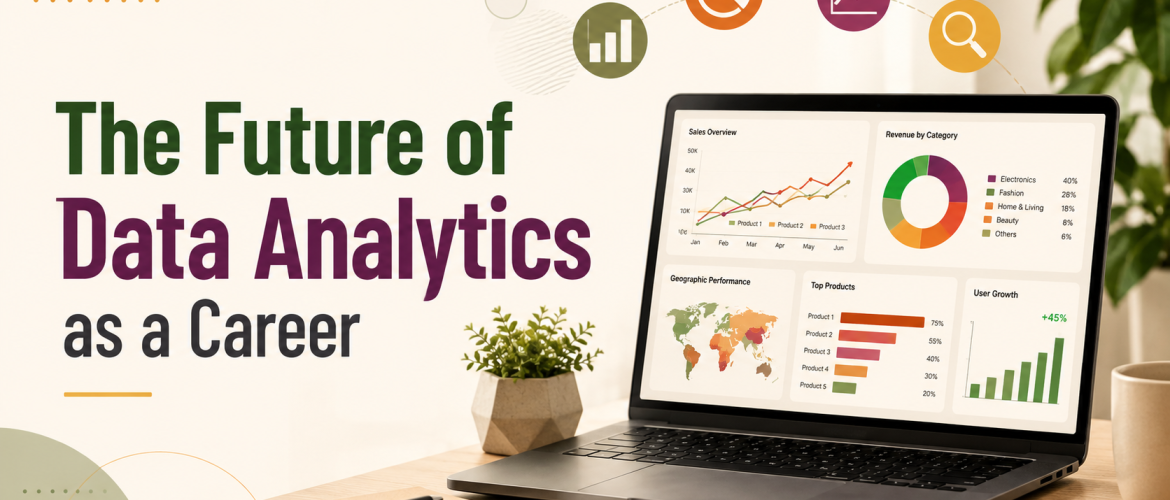
Every business collects data today. Whether it is a hospital keeping patient records, a bank monitoring transactions, an online store tracking customer purchases, or a logistics company managing deliveries, data has become a part of everyday business operations. However, collecting data alone is not enough. Companies also need professionals who can understand that information and use it to make better decisions.
This is where data analytics plays an important role.
Over the last few years, data analytics has grown from a specialized field into one of the most in-demand career paths in the IT industry. Businesses are investing heavily in digital technologies, artificial intelligence, and business intelligence tools, creating new opportunities for professionals who know how to work with data.
If you are thinking about building a career in IT, data analytics is a field worth exploring. It combines problem-solving, business understanding, and technology to help organizations make smarter decisions. More importantly, it offers opportunities across many industries, making it a flexible and future-ready career choice.
Why Is Data Analytics Growing So Quickly?
The amount of data generated around the world continues to increase every year. Mobile applications, websites, online payments, cloud platforms, smart devices, and social media all produce huge amounts of information every second. Managing this information has become a business priority.
Companies no longer want to simply store data. They want to understand what the data is telling them. They want to know what customers prefer, which products perform well, where costs can be reduced, and how future business decisions can be improved.
This growing dependence on data means businesses need professionals who can organize information, create reports, identify trends, and present clear insights. Instead of being limited to technology companies, data analytics is now used in almost every industry.
How AI Will Change Data Analytics
This is the concern keeping many students up at night. If AI can analyze data automatically, why would companies need human data analysts?
The honest answer — AI will not replace data analysts. But it will change what data analysts do.
What AI Is Good At:
- ● Running calculations at scale
- ● Identifying patterns in massive datasets
- ● Automating repetitive analysis tasks
- ● Generating reports automatically
- ● Processing data faster than humans
What AI Cannot Do:
- ● Ask the right questions about data
- ● Understand business context and implications
- ● Communicate findings to non-technical stakeholders
- ● Make strategic recommendations
- ● Challenge flawed assumptions
- ● Explain why data says what it says in business terms
This is the key insight. AI is excellent at mechanics. Humans are essential for thinking. A data analyst in 2030 will spend less time on mechanical analysis (calculations, report generation) and more time on thinking (asking questions, interpreting findings, providing strategic insight).
This is actually good news. It means data analysts will move up the value chain. Instead of spending 80% of time on mechanics and 20% on thinking, the ratio will flip.
Data Analytics Is Used Across Many Industries
One of the biggest advantages of choosing data analytics is that your skills can be applied in different sectors. Unlike some careers that are limited to one industry, data analytics supports businesses of every type.
Here are just a few examples:
| Industry | How Data Analytics Is Used |
|---|---|
| Healthcare | Improve patient care and hospital planning |
| Banking | Detect fraud and analyze financial trends |
| Retail | Study customer behavior and sales performance |
| Logistics | Optimize delivery routes and inventory |
| Education | Monitor student performance and planning |
| Manufacturing | Improve production efficiency and reduce waste |
This variety gives students greater career flexibility because the same analytical skills remain valuable across different business environments.
The Skills That Will Matter Most
As AI handles more mechanics, certain skills become more valuable.
1. Business Acumen
Understanding the business context will become more important than ever. Why does this metric matter? What decision should this insight influence? How does this connect to business strategy?
Data analysts who understand business strategy will be in higher demand than those who just analyze numbers.
2. Communication Skills
As AI handles analysis, the ability to communicate findings becomes the differentiator. Can you explain complex data insights in simple terms? Can you tell a story with data?
3. Critical Thinking
AI will do the analysis. Humans will question whether the analysis is asking the right questions. Humans will challenge assumptions. This critical thinking skill becomes the most valuable.
4. Data Literacy for Non-Analysts
As AI democratizes data analysis, more people will be able to generate reports and dashboards. Data analysts who can teach others how to think about data will become invaluable.
5. Domain Expertise
A data analyst who understands healthcare deeply is more valuable than one who just knows tools. A data analyst who understands finance deeply is more valuable than one who just knows SQL.
Career Opportunities in Data Analytics
One of the biggest reasons students choose data analytics is because it offers opportunities across many industries. Every organization collects data, but not every organization knows how to use it effectively. This creates a growing need for professionals who can organize information, identify trends, and help businesses make better decisions.
Unlike some careers that are limited to one industry, data analytics gives you the flexibility to work in sectors such as banking, healthcare, retail, logistics, manufacturing, education, e-commerce, and even government organizations. As businesses continue their digital transformation, the demand for skilled data professionals is expected to remain strong.
Many students begin with entry-level roles and gradually move into more specialized positions as they gain experience and learn advanced tools. Some common career paths include:
- ● Data Analyst
- ● Business Analyst
- ● Business Intelligence Analyst
- ● Reporting Analyst
- ● Data Visualization Specialist
- ● Data Analytics Consultant
As professionals continue learning technologies such as Power BI, SQL, Python, cloud platforms, and big data tools, they can explore even broader career opportunities within the IT industry.
The Career Trajectory
Here is what a data analytics career might look like in 2030.
Years 1-2 (Entry-Level):
- ● Learning tools (SQL, Python, Power BI)
- ● Analyzing data others ask you to analyze
- ● Building foundational skills
- ● Salary: AED 4,000 – 5,500
Years 3-5 (Mid-Level):
- ● Asking better questions about data
- ● Understanding business context
- ● Communicating findings effectively
- ● Mentoring junior analysts
- ● Salary: AED 6,000 – 9,000
Years 6-10 (Senior/Specialist):
- ● Strategic data work
- ● Deep domain expertise
- ● Business partnership role
- ● Analytics leadership
- ● Salary: AED 10,000 – 18,000+
The progression is clear. The opportunity is real.
How to Prepare for a Career in Data Analytics
Students sometimes feel overwhelmed because there are so many tools and technologies available. The good news is that you do not need to learn everything at once.
The best approach is to build your knowledge step by step. Start with the fundamentals before moving on to advanced topics.
A structured learning path may look like this:
| Learning Stage | Skills to Develop |
|---|---|
| Foundation | Excel, data handling, basic statistics |
| Intermediate | SQL, databases, Power BI, dashboards |
| Advanced | Python, automation, big data, cloud analytics |
| Professional Growth | Business understanding, communication, project experience |
Following a structured path helps students develop confidence while avoiding unnecessary confusion. Each stage builds on the previous one, making it easier to understand more advanced concepts later.
Conclusion
Data analytics is no longer just a technology trend—it has become an essential part of how modern businesses operate. Organizations across every industry depend on data to improve performance, understand customers, reduce costs, and make better decisions. As digital transformation continues, professionals with strong analytical skills will remain valuable for many years to come.
For students planning to build a career in IT, data analytics offers an excellent combination of technical learning, business understanding, and long-term growth. Success in this field comes from developing practical skills, learning the right tools, and continuously adapting to new technologies as they emerge.
At Macob IT Solutions, students interested in a Data Analysis Course Dubai learn through practical projects, hands-on exercises, and industry-oriented training designed to build real workplace skills. Combined with structured IT Training in Dubai, this practical approach helps learners develop the confidence and technical knowledge needed to begin a successful career in data analytics and continue growing as the industry evolves.