
Blog
Key Differences Between IT Support and Network Engineering
- January 24, 2026
- Posted by: newmacobitdxb
- Category: Uncategorized
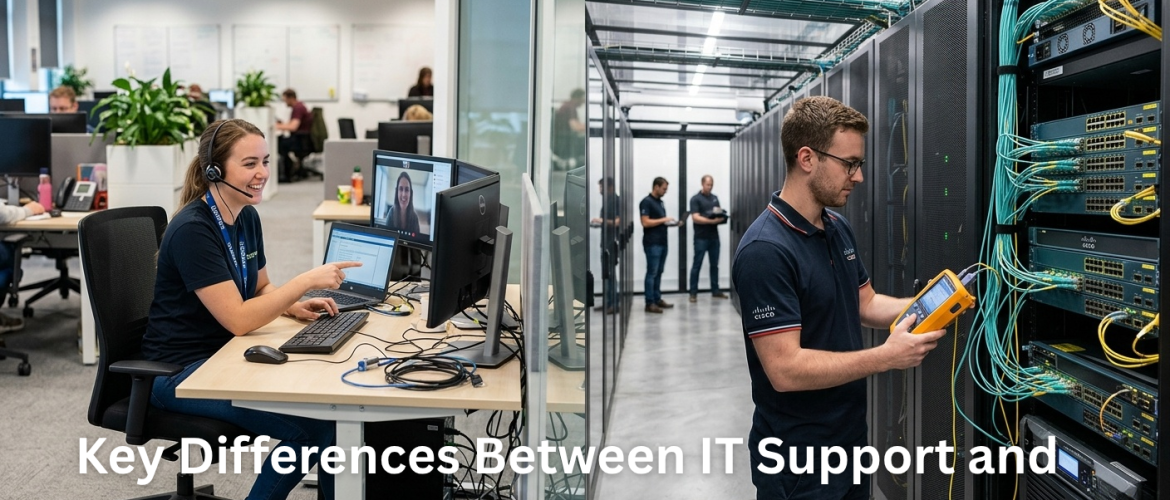
Starting a career in IT can feel confusing, especially when you come across roles like IT Support Engineer and Network Engineer. Many students and career switchers are unsure which path to choose, even though both roles are in high demand in Dubai and across the UAE.
Understanding the difference between these roles is important before you begin your learning journey. While both are part of IT infrastructure, they focus on different responsibilities, skill sets, and career growth paths. Choosing the right path early can help you save time, build relevant skills, and move faster toward your career goals.
This guide explains the key differences between IT support and network engineering in a simple and practical way to help you choose the right career path.
What is IT Support?
IT Support is often the starting point for many professionals entering the IT industry. It focuses on maintaining computer systems, assisting users, and resolving everyday technical issues that occur within an organization. This role plays a key part in ensuring that employees can work without interruptions caused by technical problems.
IT support professionals act as the first line of response when something goes wrong with systems, software, or devices. They help fix issues quickly and ensure that business operations continue smoothly. This role also helps beginners understand how real IT environments function, making it a strong foundation for long term career growth.
Common Responsibilities of IT Support Engineers
• Installing and configuring computers and software
• Troubleshooting hardware and software issues
• Managing user accounts and permissions
• Providing technical support to employees
• Handling basic network connectivity issues
IT support roles are ideal for beginners because they build strong foundational knowledge of IT systems and daily operations used in companies.
What is Network Engineering?
Network Engineering is a more specialized and advanced area within IT infrastructure. It focuses on designing, managing, and maintaining the network systems that allow computers and devices to communicate with each other. These networks are the backbone of modern organizations, supporting everything from emails to cloud applications.
Network engineers work with enterprise level technologies such as routers, switches, and firewalls. Their role is not only to fix issues but also to design efficient and secure network systems that support business needs. This makes the role more technical and requires a deeper understanding of networking concepts and infrastructure.
Common Responsibilities of Network Engineers
• Configuring routers and switches
• Designing network infrastructure
• Managing network security and access control
• Monitoring network performance
• Troubleshooting complex network issues
This role requires a strong technical foundation and is often pursued after gaining basic IT knowledge or completing networking focused certified training.
Key Differences Between IT Support and Network Engineering
Understanding the core differences between these roles helps students make informed career decisions. Both roles are important, but they serve different purposes within an organization and require different levels of expertise.
1. Level of Work
IT support focuses on day to day technical problems faced by users. It involves direct interaction with employees and requires quick problem solving to ensure smooth workflow within the organization. Most tasks are related to fixing issues that affect individual users or systems.
Network engineering, on the other hand, focuses on the overall infrastructure that connects systems together. It deals with designing and maintaining networks that support entire organizations. The work is more system focused rather than user focused.
2. Technical Complexity
IT support involves basic to intermediate level technical tasks such as troubleshooting systems, installing software, and resolving user issues. It is more practical and easier to start for beginners with limited technical background.
Network engineering requires a deeper understanding of networking concepts such as routing protocols, IP addressing, and network security. It involves working with complex systems and requires continuous learning and technical expertise.
3. Skills Required
IT support professionals need a mix of technical and communication skills. Since they interact directly with users, they must be able to explain solutions clearly and solve problems efficiently. Basic knowledge of operating systems, hardware, and troubleshooting is essential.
Network engineers require strong technical skills in networking and infrastructure. They must understand how data flows across networks and how to configure devices to ensure secure and efficient communication. Analytical thinking and problem solving skills are very important in this role.
4. Career Entry Point
IT support is the most common entry point into the IT industry. It allows beginners to gain real world experience and understand how IT systems are used in organizations. Many professionals start here before moving into specialized roles.
Network engineering is usually the next step after gaining experience or completing advanced training. It is ideal for those who want to specialize in networking and infrastructure management.
5. Salary and Growth
In Dubai, IT support roles generally offer entry level salaries, making them suitable for beginners starting their careers. However, these roles provide valuable experience that can lead to better opportunities.
Network engineering roles offer higher salary potential because they require advanced skills and expertise. Professionals in this field can also move into higher roles such as network architect, cloud engineer, or cybersecurity specialist.
Which Career Path Should You Choose?
Choosing between IT support and network engineering depends on your current skill level and long term career goals. If you are new to IT or switching from a non technical background, starting with IT support is a practical and effective choice. It helps you build confidence and understand real work environments.
If you are interested in working with networks, infrastructure, and advanced technologies, then moving toward network engineering is a strong career path. Many professionals follow a step by step approach, starting with IT support and then specializing in networking or cloud technologies.
How to Start Your Career in IT Infrastructure
Starting a career in IT requires a structured learning approach that focuses on both fundamentals and practical skills. Instead of learning random topics, it is important to follow a clear path that builds your knowledge step by step.
A typical learning path includes:
• Basic hardware and networking fundamentals
• Microsoft system administration
• Networking concepts such as CCNA
• Cloud platforms such as Azure
• Real time practical learning
You can explore these structured learning paths on our Courses Page to understand how different technologies are connected and how they support real IT job roles.
Importance of Practical Training
One of the biggest challenges faced by students is the lack of real world experience. Many learners understand theory but struggle to apply it in real situations. This is where practical training becomes very important.
Practical exposure helps students work with real systems, understand troubleshooting methods, and gain confidence in handling technical issues. It also prepares them for interviews where practical knowledge is often tested.
At MACOB IT Solutions, the training approach focuses on practical learning with hands on labs, real infrastructure exposure, and industry relevant scenarios.